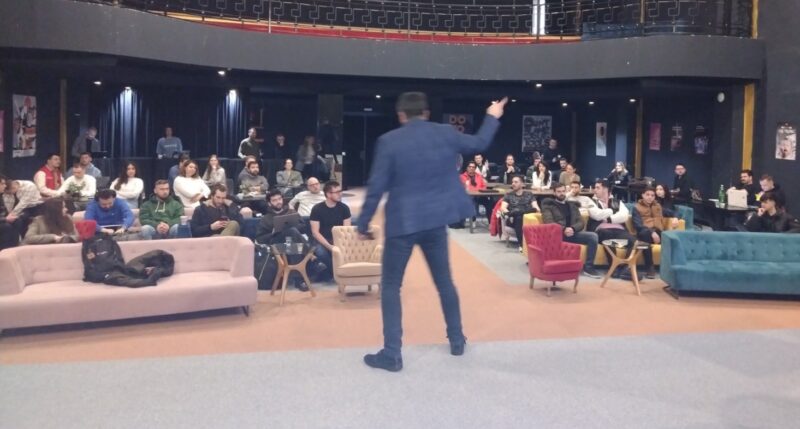
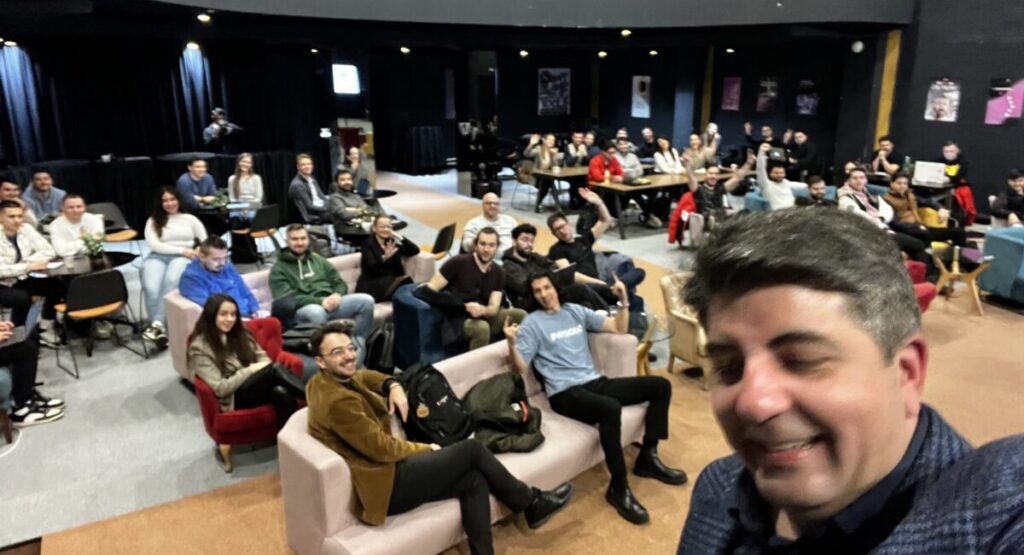
On January 28, 2025, Brulz ran a Sales & Negotiations masterclass for a room of founders (Founder Games 2025) wrestling with the same question: how do you build a repeatable, scalable sales engine without a full team or years of trial and error?
Most founders didn’t start a company to become salespeople. Yet in the earliest years, founder-led sales is often the only sales a business has.
Over one intensive session we covered everything from the psychology of a first objection to choosing a CRM. Here’s a recap of the core ideas from that room — and a few things any founder can put into practice this week.
Sales Is Service, Not a Personality Type
The first reframe is the most important one: sales isn’t talking, being pushy, or nagging someone into a decision. It’s the service of connecting people who have a need with a business that can fill it. And it doesn’t start where founders think it does — it starts with the first objection. Everything before that is just conversation.
Customers move through a predictable progression: they need to know you, then like you, then trust you, before they’ll ever buy from you. In one of the case studies shared, that journey took an average of 7 hours of engagement, 11 touch points, and 4 channels — website, social, email, and events — before a prospect converted. If your sales process assumes a one-touch close, that’s usually the first thing to fix.
Know Who You’re Selling To, Then Where To Find Them
Before touching a single channel, define your Ideal Customer Profile: score prospects on need, timing, likelihood of success, and budget, and be honest about who’s a best fit versus a workable one. It matters more than most founders assume — companies with a clearly defined ICP report win rates up to 67% higher than those without one. Pair it with a value proposition canvas that names the specific job your customer is trying to get done, and the pains and gains tied to it.
Only then pick channels. The masterclass used the Bullseye Framework: lay out all 19 possible traction channels (content, SEO, paid ads, community, affiliates, trade shows, and more), narrow to a middle ring of channels worth testing, and run small, time-boxed tests on one to two channels — before committing real budget. Track CAC against ACV per channel, not just clicks or leads.
Build the Machine: Process, People, and a CRM
A documented sales process isn’t bureaucracy — it’s a performance lever.
Research shared showed that organizations with mature, well-documented sales processes post 90% revenue growth versus 72% for those without, and win 54% of proposals versus 45%. A Harvard Business study cited in the session found a similar pattern: half of high-performing sales organizations have explicitly structured, documented processes, versus just 28% of underperformers.
As you hire, choose a team structure on purpose rather than by accident: “The Island” (full-cycle reps who do everything, common in real estate or financial services), “The Assembly Line” (specialized lead gen, SDR, AE, and customer success roles), or “The Pod” (customer-centric teams organized by industry or region).
And don’t skip the CRM – research links CRM adoption to up to 29% more sales and 34% higher sales productivity. The tool matters less than the discipline of actually using one.
Founder’s Homework:
The session closed with a short list, and it’s the best place for any founder to start: understand the stage your business is actually in, clearly define your ICP, define the problem your value proposition solves for that ICP, pick the first 5 channels you’ll experiment with, set the tech stack, team, and budget to test them, run it as a 90-day plan, then measure and adapt. None of it requires a big team or a big budget — it requires doing it in order.
The full deck from the January masterclass, including the frameworks, worksheets, and case studies referenced above, can be shared with you, or if you’d like Brulz to run this session for your team or want a hand applying it to your own business, get in touch.